
If you walk into our greenhouse on any given day, you will hear a mix of ambient sounds, team members helping guests, and the gentle rustle of leaves. But according to a fascinating new study published in Evolutionary Studies in Imaginative Culture, we might want to start handing out headphones to our vegetable crops.
Scientists recently set out to test exactly how acoustic stimulation impacts the growth, weight, and root development of leafy greens. Specifically, they chose Bok Choy (Brassica rapa) and split them into three distinct environments: one group listened to classical music, one group was exposed to rock music, and a third control group sat in absolute silence.
The results were a landslide victory for classical composers.
The Symphony of Growth
The Bok Choy plants that were treated to classical tunes absolutely thrived. They blew the other groups out of the soil, demonstrating:
-
The highest total fresh weight.
-
The highest overall shoot weight.
-
The highest mean number of leaves per plant.
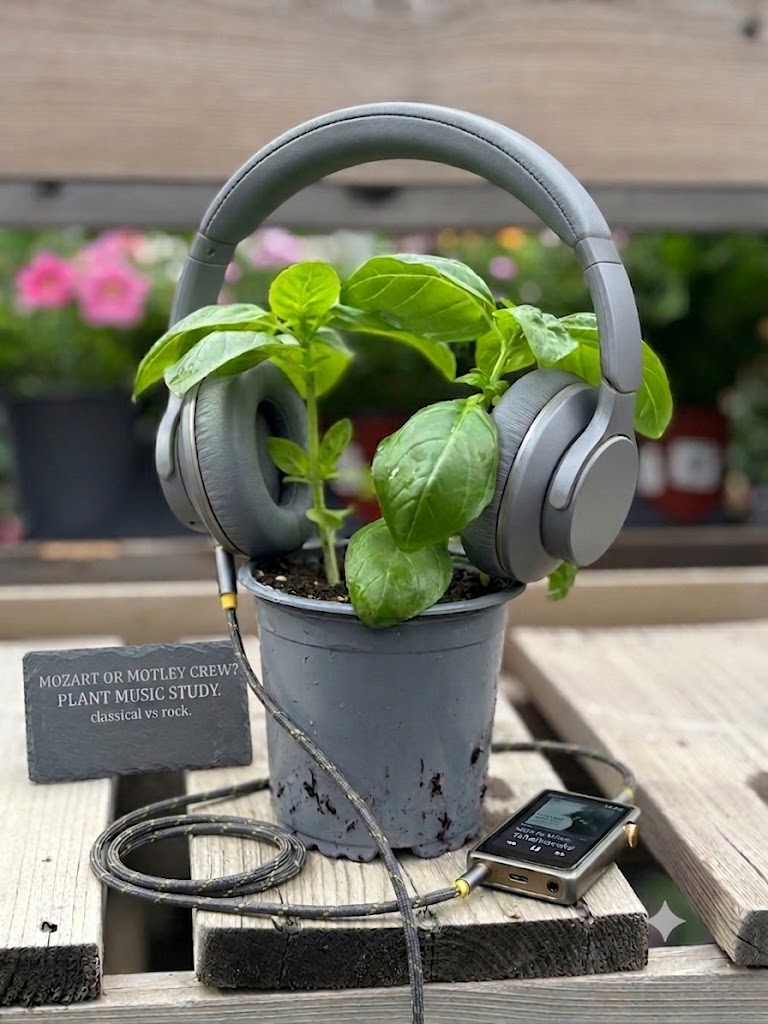
Interestingly, their root systems adapted uniquely too. While they didn't grow the longest roots, they developed the highest root volume. This means classical music helped produce stouter, thicker, more compact root systems. In the gardening world, a dense, stout root system is the ultimate foundation for a highly resilient, nutrient-hungry plant.
Why Rock Music Stunted the Harvest
On the flip side of the coin, the rock music group faced a tough time. Across every single parameter measured by the researchers, the plants exposed to rock music scored the lowest. They underperformed compared to the classical group and even lagged behind the control group that grew in total silence.
While plants obviously do not have ears or musical taste, they are incredibly sensitive to vibrations. The steady, harmonic pressure waves of classical music seem to stimulate cellular activity and nutrient uptake. The harsh, erratic frequency spikes common in rock music, however, appear to cause stress at a cellular level, slowing down growth.



Our Takeaway for Alberta Gardeners
While we aren't suggesting you need to permanently pipe Beethoven or Bach into your backyard raised beds, this research highlights just how responsive living plants are to their environments.
If you are looking to give your vegetable garden an extra edge during our short Alberta growing season, keeping the backyard patio vibe a bit more acoustic and melodic might just result in a heavier harvest.
Are you team classical or team silence in the garden? Drop by the greenhouse and let us know what you play for your crops!