
How to Choose the Right Landscape Designer for Your Project

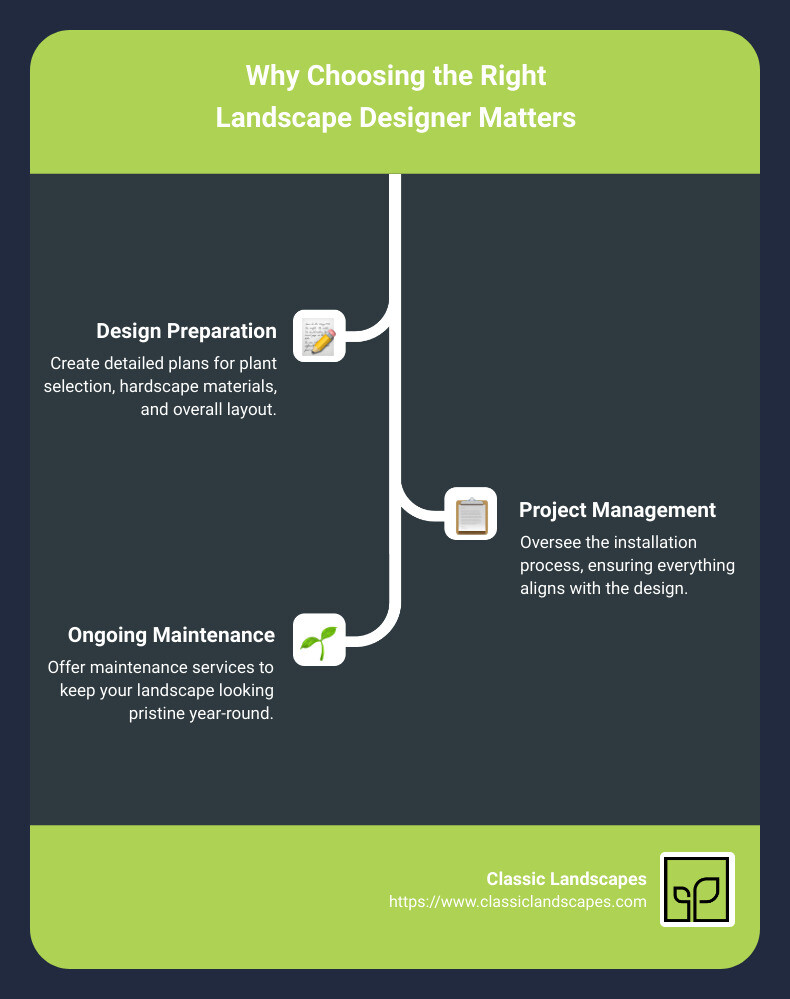
Why Choosing the Right Landscape Designer Matters
When seeking to transform your outdoor space into a haven of beauty and functionality, hiring the right landscape designer is crucial. A professional landscape designer can help you plan, design, and execute a landscape that complements your lifestyle, improves your property's value, and provides a personalized service to meet your specific needs.
Here are quick answers to what a landscape designer does:
- Design Preparation: Create detailed plans for plant selection, hardscape materials, and overall layout.
- Project Management: Oversee the installation process, ensuring everything aligns with the design.
- Ongoing Maintenance: Offer maintenance services to keep your landscape looking pristine year-round.
My name is Josh Payne, with over 25 years in the landscape and garden industry. I lead Classic Landscapes, a premier provider of personalized and high-quality landscaping services. With my team, we strive to bring your outdoor vision to life with precision and creativity.
Understanding the Role of a Landscape Designer
A landscape designer is a professional who transforms outdoor spaces by blending nature with functionality and beauty. Let’s break down what they do and why they’re essential.
Garden Plants and Trees
A landscape designer selects the right garden plants and trees for your space. This involves choosing species that thrive in your climate and soil. For example, in Houston, native plants like Black-eyed Susan and Texas lantana are popular because they require less water and maintenance while supporting local wildlife.
Hardscape Materials
Hardscape materials include elements like patios, walkways, and retaining walls. These materials not only add structure to your garden but also improve its aesthetic appeal. For instance, using gravel and decorative stone in larger sizes can prevent puddling and maintain stability during heavy rains.
Functional Outdoor Spaces
Creating functional outdoor spaces means designing areas that serve specific purposes, such as entertaining guests, playing with kids, or relaxing. This could include shaded areas with pergolas, covered patios, or even outdoor kitchens.
Privacy
Privacy is a key consideration in landscape design. Designers use plants, fences, and other structures to create secluded areas. For example, tall hedges or decorative fences can provide a sense of enclosure and intimacy in your garden.
Rainwater Runoff
Managing rainwater runoff is crucial to prevent flooding and erosion. Landscape designers incorporate permeable surfaces, like gravel, to soak water back into the ground, reducing flood risks. They also design efficient irrigation systems to promote water conservation.
Aesthetics
Aesthetics involve the visual appeal of your outdoor space. Designers consider color, texture, and form to create a harmonious environment. The principles of proportion, order, repetition, and unity guide them in organizing these elements into a cohesive design.
Habitats for Animals
Lastly, landscape designers aim to create habitats for local wildlife. By incorporating native plants, they provide food and shelter for birds, butterflies, and other animals. This not only improves biodiversity but also brings your garden to life.
By understanding these key aspects, you can better appreciate the value a professional landscape designer brings to your outdoor project.
Next, let’s dig into the differences between a landscape designer and a landscape architect.
Landscape Designer vs. Landscape Architect
When planning your outdoor space, you might wonder: should you hire a landscape designer or a landscape architect? While both professionals work to create beautiful and functional outdoor areas, there are key differences between them. Understanding these differences can help you make the best choice for your project.
Technical Knowledge
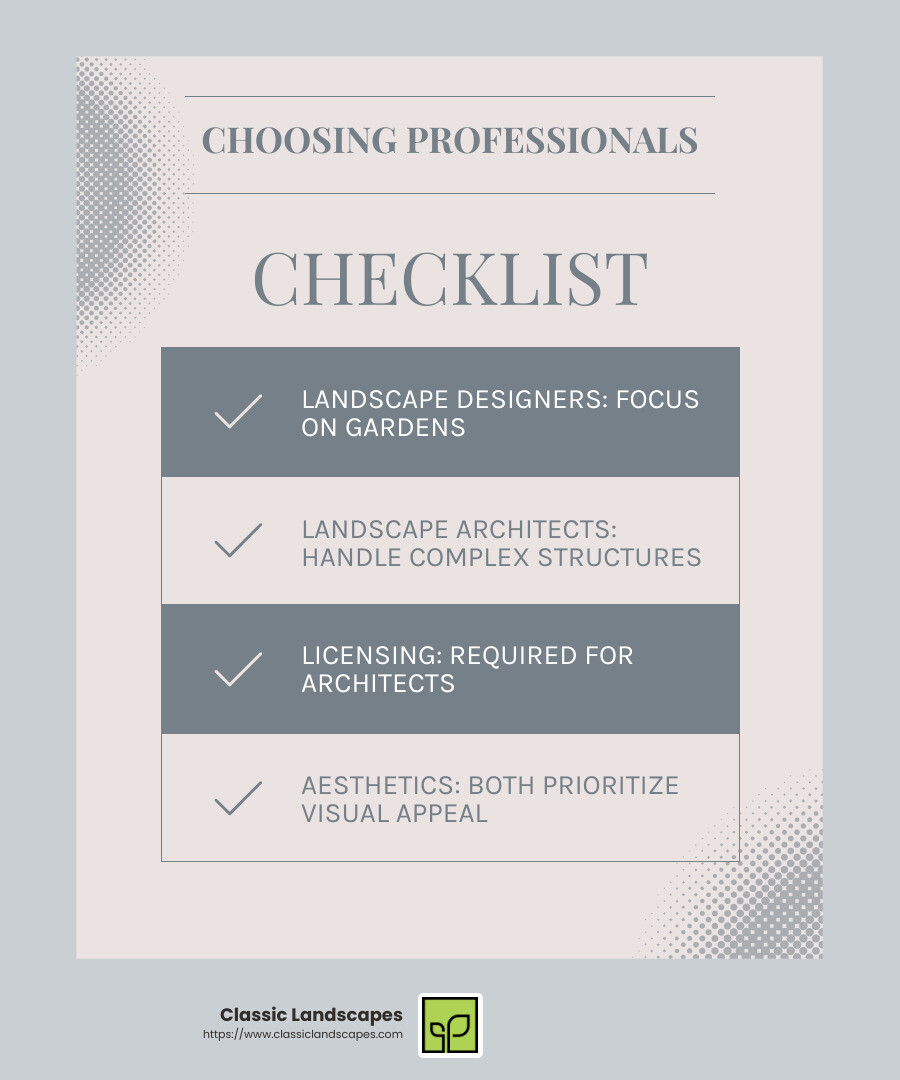
Landscape designers have extensive knowledge of plant selection, garden aesthetics, and basic structural elements. They excel in creating visually appealing and practical gardens that suit your lifestyle.
Landscape architects, on the other hand, possess advanced technical knowledge. They are trained to handle complex projects that require detailed planning and engineering. This includes large-scale public parks, commercial properties, and urban planning.
Plant Selection
Both landscape designers and landscape architects are skilled in selecting the right plants for your environment. However, landscape designers often focus more on the aesthetic and functional aspects of plant selection. They choose plants that will thrive in your specific climate and soil conditions, ensuring a beautiful and sustainable garden.
Landscape architects also consider the ecological impact of plant selection. They choose species that support local ecosystems and promote biodiversity, which is crucial for larger projects.
Structural Design
Structural design is another area where landscape architects shine. They are adept at designing complex structures such as bridges, retaining walls, and water features. Their training includes an understanding of engineering principles, which allows them to create safe and durable outdoor spaces.
Landscape designers also work with structural elements, but their focus is usually on smaller, more decorative features. They design patios, walkways, and garden walls that improve the beauty and functionality of your space.
License
One significant difference is that landscape architects are required to have a license to practice. This involves obtaining a degree in landscape architecture, completing an internship, and passing a rigorous exam. This licensure ensures that they meet professional standards and are qualified to handle complex projects.
Landscape designers, while highly skilled, are not required to have a license. Their expertise is often gained through formal education, experience, and a passion for garden design.
Aesthetics
Both professionals aim to create aesthetically pleasing outdoor spaces, but their approaches can differ. Landscape designers focus on the visual and sensory aspects of a garden. They use color, texture, and form to create harmonious environments that reflect your personal style.
Landscape architects consider aesthetics as part of a broader context. They integrate visual appeal with functionality, sustainability, and community needs. Their designs often address larger-scale issues like urban heat islands, stormwater management, and public accessibility.
Choosing the Right Professional
For residential projects or smaller commercial spaces, a landscape designer like those at Classic Landscapes can provide the personalized service and creative solutions you need. They specialize in changing ordinary yards into extraordinary outdoor living areas.
For larger or more complex projects, a landscape architect might be the better choice. Their technical expertise and ability to steer regulatory requirements make them ideal for tackling big challenges.
By understanding the differences between landscape designers and landscape architects, you can choose the right professional to bring your vision to life.
Next, let's explore the key factors to consider when choosing a landscape designer.
Key Factors to Consider When Choosing a Landscape Designer
Choosing the right landscape designer can make a huge difference in the success of your project. Here are some key factors to consider:
Experience
Experience is crucial. Look for designers who have been in the field for several years and have a diverse portfolio. Experienced designers like those at Classic Landscapes have likely encountered a wide range of challenges and know how to handle them effectively.
Pro Tip: Ask about their experience with projects similar to yours. This ensures they understand the specific needs and potential issues.
Portfolio
A designer’s portfolio showcases their style and capabilities. Review it to see if their previous work aligns with your vision. Look for diverse projects that demonstrate creativity and attention to detail.
Example: Classic Landscapes' portfolio includes everything from small residential gardens to large commercial spaces, showing their versatility and expertise.
Client Reviews
Client reviews can provide insights into a designer’s reliability and quality of work. Look for consistent positive feedback, especially regarding communication, project management, and final results.
Quote: “They redid our backyard and it turned out so much better than we ever expected. Also, Scott (the owner) is a really nice guy.” – Satisfied Customer
Communication Skills
Good communication is vital for a successful project. Your landscape designer should listen to your ideas, provide clear explanations, and keep you updated throughout the process. Effective communication helps ensure that the final design meets your expectations.
Tip: During the initial consultation, gauge their willingness to listen and answer your questions.
Budget
Discuss your budget upfront. A good landscape designer will provide a realistic estimate and work within your financial constraints. They should also offer cost-saving suggestions without compromising on quality.
Fact: Classic Landscapes is known for delivering high-quality designs that fit various budgets, ensuring you get the best value for your investment.
Timeline
Understanding the timeline for your project is essential. Ask for a detailed schedule that outlines key milestones and completion dates. This helps you plan accordingly and ensures the project stays on track.
Tip: Make sure the timeline includes time for design revisions and potential delays due to weather or other unforeseen factors.
By considering these factors, you can confidently choose a landscape designer who will bring your vision to life.
Next, let's dig into the top questions you should ask a potential landscape designer to ensure they are the right fit for your project.
Top 5 Questions to Ask a Potential Landscape Designer
When choosing a landscape designer, asking the right questions can help you find the perfect match for your needs. Here are the top five questions to consider:
1. What is Your Design Process?
Understanding the designer's process is crucial. Ask them to walk you through each step, from the initial consultation to the final design. This will give you an idea of how they approach projects and how involved you'll be in the process.
Example: At Classic Landscapes, the design process starts with an in-depth consultation to understand your vision and needs. They then create a detailed plan, incorporating your feedback at every stage, ensuring the final design aligns with your expectations.
2. What is the Project Timeline?
Knowing how long your project will take helps you plan better. Ask for a detailed timeline, including key milestones and completion dates. This will help ensure that the project stays on track and meets your expectations.
Tip: Make sure to discuss potential delays due to weather or other unforeseen factors. A good designer will account for these in their timeline.
3. How Do You Handle Maintenance?
Maintenance is a critical aspect of any landscaping project. Ask about the maintenance requirements for the proposed design and whether they offer ongoing maintenance services.
Fact: Classic Landscapes offers custom maintenance programs to keep your landscape looking pristine year-round. This includes lawn care, plant maintenance, and seasonal clean-ups.
4. Can You Show Me Previous Projects?
A designer's portfolio is a window into their style and capabilities. Ask to see examples of their previous work, especially projects similar to yours. This will help you gauge their experience and creativity.
Quote: “We talked to a lot of different landscape design companies before we went with them, they were very knowledgeable and have old school customer service (in a good way).” – Satisfied Client
5. What is the Cost Estimation?
Discussing the budget upfront is essential. Ask for a detailed cost estimate, including all potential expenses. This will help you avoid surprises and ensure the project fits within your financial constraints.
Pro Tip: Classic Landscapes is known for delivering high-quality designs that fit various budgets. They provide realistic estimates and offer cost-saving suggestions without compromising on quality.
By asking these questions, you can ensure that you choose a landscape designer who is the right fit for your project, leading to a successful and satisfying outcome.
Next, let's explore the popular landscaping styles and trends that can inspire your project.
Popular Landscaping Styles and Trends
Choosing the right style for your landscape can transform your outdoor space into a personal haven. Here are some popular landscaping styles and trends that can inspire your project:
English Colonial Style
English colonial style is a classic choice that brings a touch of elegance to any yard. This style often features lawns, hedges, and flowering borders. Think of a garden that looks like it's straight out of a storybook, complete with cobblestone paths and quaint benches.
Fun Fact: Many Houston residents love this style for its timeless appeal and the way it creates a lush, inviting space.
Modern Designs
Modern landscape designs are all about clean lines and minimalism. Imagine giant concrete pavers, horizontal wood fences, and big blocks of ornamental grasses. This style is perfect for those who prefer a sleek, contemporary look.
Quote: “We recently had the pleasure of working with Classic Landscapes for a modern landscape design, and the result was stunning!” – Happy Client
Traditional Design Tropes
If you prefer something in between, traditional design tropes updated with modern aesthetics might be your go-to. Think brick ranch houses painted white, wood fences draped in vines, and front porches with exposed wood beams. This style offers a cozy, yet updated look.
Example: Classic Landscapes often incorporates these elements to create a timeless yet fresh appearance for their clients.
Native Plants
Using native plants is a growing trend for its sustainability and low maintenance. Native plants are adapted to the local climate, making them easier to care for and more resilient.
Pro Tip: Classic Landscapes has a database of plants that match Houston’s planting zones, ensuring your garden thrives year-round.
Climate-Adapted Species
In Houston's humid, sub-tropical climate, choosing climate-adapted species is crucial. These plants can withstand the local weather conditions, from steamy summers to mild winters.
Fact: Classic Landscapes uses satellite and aerial imagery, coupled with your photos and videos, to recommend the best plants for your yard.
By exploring these popular landscaping styles and trends, you can find the perfect look for your outdoor space. Whether you lean towards the classic elegance of English colonial style or the sleek lines of modern designs, there's something to suit every taste and need.
Next, let's dig into the benefits of hiring a professional landscape designer for your project.
Benefits of Hiring a Professional Landscape Designer
Hiring a professional landscape designer can transform your outdoor space from ordinary to extraordinary. Here are some key benefits:
Expert Advice
A landscape designer brings a wealth of knowledge to your project. They understand plant species, soil types, and climate conditions. This expertise ensures that your garden will thrive in its environment.
Example: Classic Landscapes' team includes award-winning landscape architects and technologists with over 30 years of experience, offering advice custom to your specific needs.
Custom Designs
Every yard is unique, and a professional can create a design that reflects your personal style and functional needs. Whether you want a serene retreat or a space for entertaining, they can bring your vision to life.
Quote: “The design team made my opinions and ideas feel valued and understood.” – Satisfied Classic Landscapes Client
Increased Property Value
A well-designed landscape can significantly boost your property’s value. Curb appeal matters, and a beautiful yard can make a lasting first impression on potential buyers.
Fact: Properties with professional landscaping can see a return on investment of up to 20%.
Efficient Use of Space
Professionals know how to maximize every inch of your yard. They can create functional areas for dining, playing, and relaxing, all while maintaining a cohesive and aesthetically pleasing design.
Pro Tip: Classic Landscapes integrates functional elements like walkways and patios seamlessly into your outdoor space.
Low Maintenance Options
A good landscape designer will consider the long-term maintenance of your garden. They can recommend low-maintenance plants and materials that fit your lifestyle, reducing the time and effort you need to keep your yard looking great.
Fact: Using native plants and climate-adapted species, as recommended by Classic Landscapes, can significantly lower maintenance needs.
Hiring a professional landscape designer is an investment that pays off in beauty, functionality, and value. Their expertise and creativity can help you achieve the outdoor space of your dreams with minimal hassle.
Next, let's explore how to work effectively with a landscape designer to ensure your project runs smoothly.
How to Work with a Landscape Designer
Working with a landscape designer can turn your outdoor dreams into reality. Here’s how to ensure a smooth and successful collaboration:
Initial Consultation
The process begins with an initial consultation. This is your chance to share your vision, preferences, and budget. The designer will assess your space and discuss possible ideas.
Tip: Bring photos or sketches of landscapes you admire. This helps the designer understand your style.
Design Review
After the consultation, the designer will create a preliminary design. This includes layouts, plant selections, and hardscape elements like patios or walkways.
Fact: Classic Landscapes' experienced design team often provides detailed renderings that help visualize the final look.
Feedback Process
Review the preliminary design and provide feedback. This is a collaborative phase where your input is crucial. Don’t hesitate to ask questions or request changes.
Quote: “The design team made my opinions and ideas feel valued and understood.” – Satisfied Classic Landscapes Client
Final Design
Once all adjustments are made, the designer will finalize the design. This includes detailed plans and specifications for all elements of the landscape.
Pro Tip: Ensure that the final design includes a clear timeline and cost breakdown.
Installation
With the design approved, the installation phase begins. The designer will oversee the construction, ensuring everything is built to plan. They coordinate with contractors and handle any issues that arise.
Example: Classic Landscapes manages every aspect of the installation process, from sourcing high-quality materials to meticulous attention to detail.
Key Steps to Remember:
- Initial Consultation: Share your vision and budget.
- Design Review: Evaluate preliminary designs and give feedback.
- Feedback Process: Collaborate to refine the design.
- Final Design: Approve detailed plans and timeline.
- Installation: Oversee construction and ensure quality.
By following these steps, you can work effectively with a landscape designer to create a stunning and functional outdoor space.
Next, we'll address some frequently asked questions about landscape designers to help you make informed decisions.
Frequently Asked Questions about Landscape Designers
What do you do as a landscape designer?
A landscape designer creates and manages outdoor spaces. They plan everything from garden plants and trees to hardscape materials like patios and walkways.
Key Responsibilities:
- Garden Plants & Trees: Selecting the right plants for your climate and aesthetic.
- Hardscape Materials: Designing patios, walkways, and other non-plant elements.
- Functional Outdoor Spaces: Creating areas for relaxation, play, and entertainment.
Example: Classic Landscapes often integrates functional elements like seating areas and pathways to improve usability.
What is the highest salary for a landscape designer?
The salary for a landscape designer can vary widely based on location and experience. In California, top earners can make a significant income.
Salary Range:
- Entry-Level: Around $40,000 per year.
- Mid-Level: Approximately $60,000 per year.
- Top Earners: In California, some can earn over $100,000 per year.
Fact: The job market for landscape designers is considered good, especially in areas with high demand for outdoor living spaces.
Is a landscape architect worth it?
Hiring a landscape architect can be a great investment, especially for complex projects.
When to Consider a Landscape Architect:
- Landscape Overhaul: Major redesigns or new constructions.
- Outdoor Structures: Adding gazebos, pergolas, or other structures.
- Irrigation Systems: Designing efficient and sustainable watering solutions.
- Commercial Spaces: Large-scale projects like parks, campuses, or business complexes.
Pro Tip: Classic Landscapes excels in both residential and commercial projects, offering custom solutions to meet diverse needs.
By understanding the role of a landscape designer and the value they bring, you can make informed decisions for your outdoor projects.
Conclusion
Choosing the right landscape designer can make all the difference in changing your outdoor space into a beautiful and functional area. At Classic Landscapes, we pride ourselves on providing personalized service custom to your unique needs.
Personalized Service
We take the time to understand your vision and preferences. Every project begins with an initial consultation where we discuss your ideas, needs, and budget. Our experienced designers then create custom designs that reflect your style and improve the natural beauty of your property.
Unique Installation Requests
Whether you're dreaming of a tranquil water feature, a lush garden, or a stylish patio, we handle all unique installation requests with precision and care. Our team has the expertise to bring your vision to life, ensuring every element is perfectly integrated into your landscape.
Careful Placement of Heavy Items
Safety and accuracy are our top priorities. When it comes to installing heavy items like large trees, stone pathways, or water features, our skilled professionals use the best techniques and equipment to ensure everything is placed correctly and securely.
By choosing Classic Landscapes, you're not just hiring a landscape designer; you're partnering with a team dedicated to changing your outdoor space into an inspiring landscape designed for your unique needs and preferences.
Ready to get started? Contact us today to begin your journey towards the perfect outdoor space.