

Flamingo Plant Care: Tips and Tricks for a Healthy Plant
Importance of Flamingo Plant Care
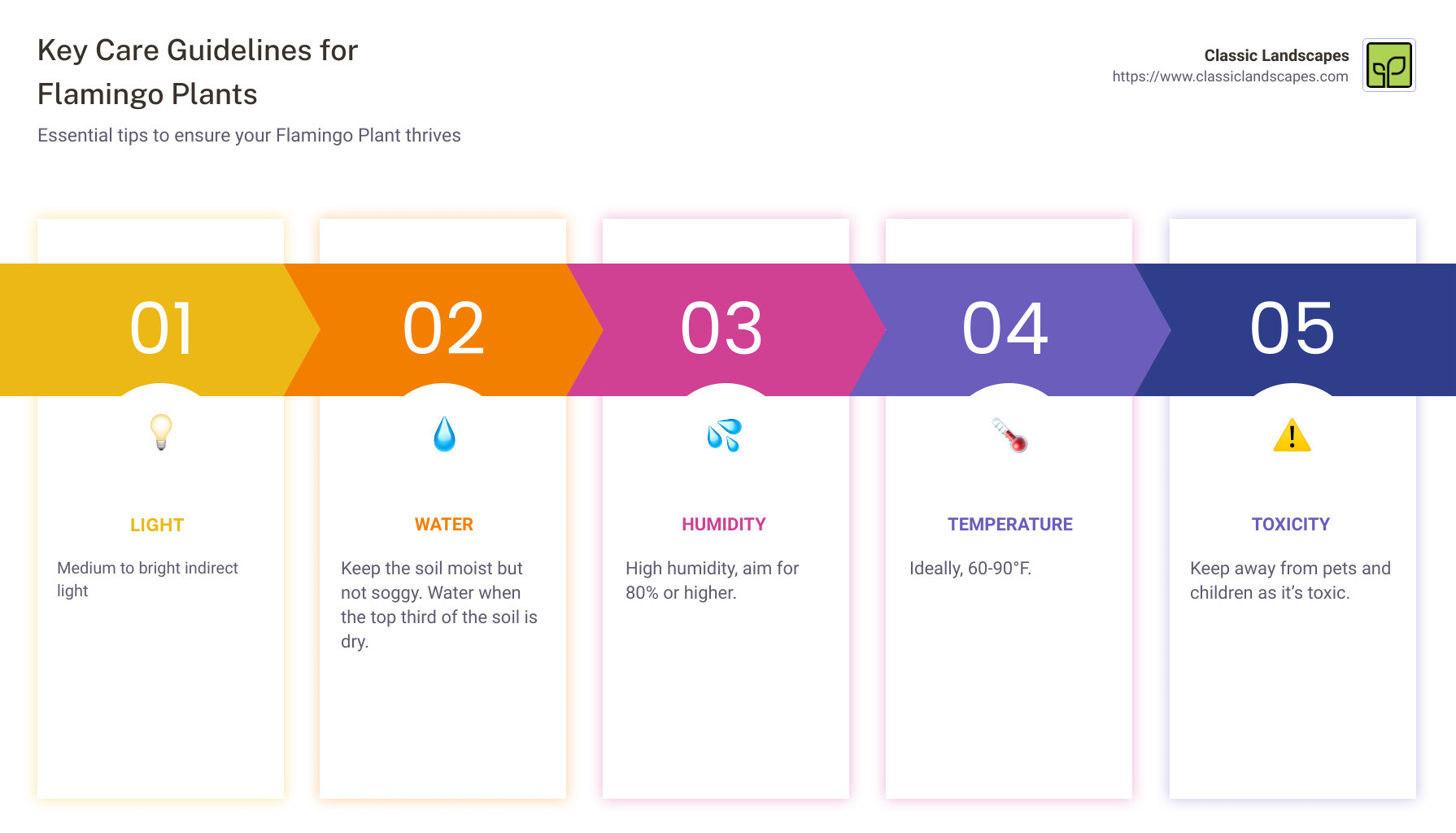
How to care for a flamingo plant is essential information for anyone looking to add a touch of tropical beauty to their indoor space. Whether you're a seasoned plant enthusiast or a beginner, here are the quick basics to get started:
- Light: Medium to bright indirect light.
- Water: Keep the soil moist but not soggy. Water when the top third of the soil is dry.
- Humidity: High humidity, aim for 80% or higher.
- Temperature: Ideally, 60-90°F.
- Toxicity: Keep away from pets and children as it's toxic.
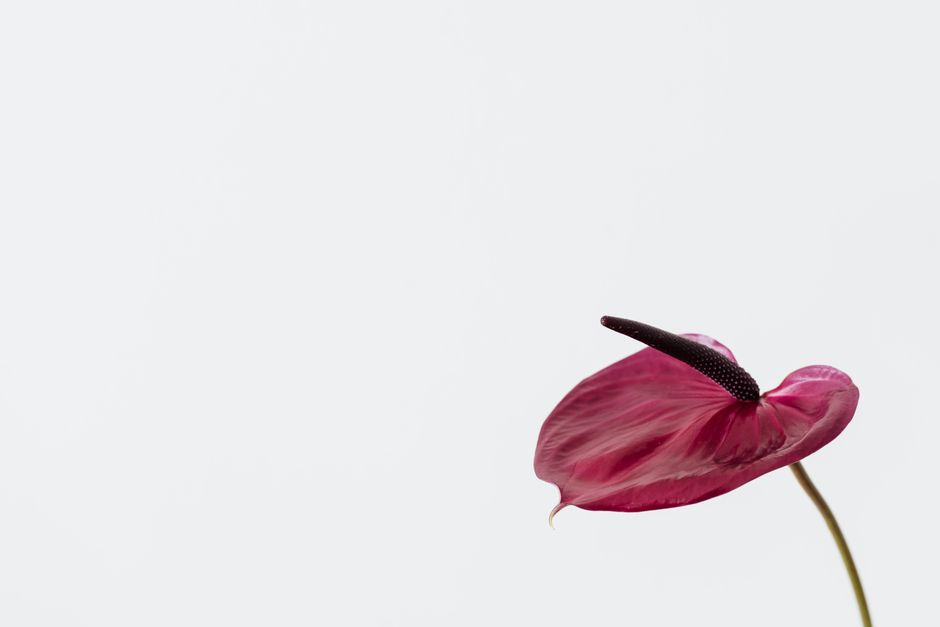
Caring for a Flamingo Plant, also known as Anthurium, ensures vibrant, long-lasting blooms and healthy foliage, adding an exotic touch to your décor. This plant, native to South America, requires specific conditions to thrive, such as bright indirect light and high humidity. By giving it the right care, you can enjoy its striking red, pink, or purple spathes and dark green, heart-shaped leaves year-round.
My name is Josh Payne, and with over 25 years of experience in landscape and garden industries, I have extensive knowledge on how to care for a flamingo plant. Classic Landscapes, where I am a passionate owner, offers personalized, high-quality outdoor solutions, ensuring your green spaces are always at their best.
Understanding the Flamingo Plant
Flamingo Plants, also known as Anthurium, are tropical beauties native to South America. These plants are renowned for their glossy, dark green, heart-shaped leaves and vibrant, waxy spathes that come in red, pink, or purple hues. The central yellow spadix adds a striking contrast, making them a favorite among houseplant enthusiasts.
Origin
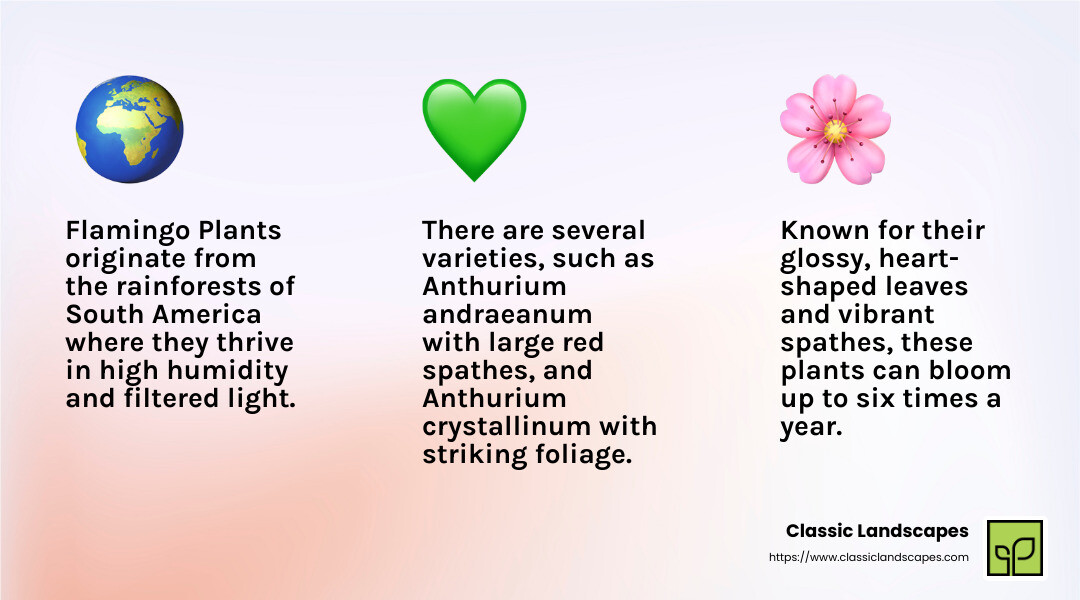
Flamingo Plants hail from the lush rainforests of South America. In their natural habitat, they thrive under the canopy of taller trees, enjoying high humidity and filtered light. This environment shapes their care needs when grown indoors.
Characteristics
The standout feature of the Flamingo Plant is its shiny, heart-shaped leaves. These leaves can grow quite large, adding a lush, tropical feel to any space. The plant’s spathes are often mistaken for flowers but are actually modified leaves that can last up to two to three months. These spathes are usually red but can also be found in pink and purple varieties.

Types
While the most common Flamingo Plant features red spathes, there are several varieties to choose from:
- Anthurium andraeanum: Known for its large, vibrant red spathes.
- Anthurium scherzerianum: Features a curly spadix and smaller spathes.
- Anthurium crystallinum: Valued for its striking foliage rather than its spathes, with velvety leaves and white veins.
Lifespan
With proper care, Flamingo Plants can live for many years. They are perennial plants, meaning they can bloom multiple times a year when given the right conditions. In optimal environments, a Flamingo Plant can bloom up to six times a year, ensuring a continuous display of color.
Understanding the origins and characteristics of the Flamingo Plant helps in providing the right care, ensuring your plant remains healthy and vibrant. For expert advice and quality landscaping services, consider reaching out to Classic Landscapes. Next, we’ll dig into the ideal conditions for these tropical beauties to thrive.
Ideal Conditions for Flamingo Plants
Flamingo Plants (Anthurium) are tropical plants that thrive in specific conditions. To keep them healthy and vibrant, it's crucial to mimic their natural habitat as closely as possible.
Light Requirements
Flamingo Plants need medium to bright indirect light. Direct sunlight can scorch their leaves, causing permanent damage. In their native rainforests, these plants grow under the canopy of taller trees, which means they’re used to filtered light.
Pro Tip: Place your Flamingo Plant near a southern, eastern, or western window, but ensure it's shielded from direct sunlight. If you notice the leaves turning yellow or brown, it could be a sign of too much light.
Temperature and Humidity
Flamingo Plants prefer warm conditions and high humidity, similar to their tropical rainforest origins.
- Temperature: These plants thrive in temperatures between 60°F and 90°F. Ideally, aim for an average of 68°F at night and up to 86°F during the day. Avoid placing them near radiators, air conditioners, or drafty windows, as sudden temperature changes can stress the plant.
- Humidity: High humidity is essential for Flamingo Plants. They feel most at home in environments with 80% humidity or higher. If your home is dry, especially in winter, consider using a humidifier or placing a pebble tray filled with water under the plant pot to increase humidity levels.
Spritzing: Regularly spritzing the leaves with water can help maintain the necessary humidity. This mimics the plant's natural environment and keeps the leaves looking fresh and healthy.
Pro Tip: Use rainwater, filtered, or bottled water for spritzing and watering to avoid the harmful effects of hard water on your plant.
By providing the right light, temperature, and humidity, you can create an ideal environment for your Flamingo Plant to flourish. Next, we'll explore the essential aspects of watering, soil, and fertilizing to ensure your plant remains healthy.
For more expert advice on plant care, consider reaching out to Classic Landscapes, your trusted partner in creating and maintaining beautiful landscapes.
How to Care for a Flamingo Plant
Proper care for your Flamingo Plant (Anthurium) involves attention to watering, soil, fertilizing, repotting, and cleaning. Let's explore each aspect to ensure your plant thrives.
Watering
Flamingo Plants prefer moist soil, but it's crucial to avoid over-watering. Over-watering can lead to root rot, while under-watering can cause the leaves to turn brown and crunchy.
- Watering Frequency: Check the soil moisture by pressing your finger about two inches down. If it feels dry, it's time to water. Typically, this means watering about once a week, but it can vary based on your home’s humidity and temperature.
- Water Quality: Use rainwater, filtered, or bottled water at room temperature. These plants don’t like hard water, which can damage the roots.
- Drainage: Ensure the water drips out from the holes in the bottom of your pot. This ensures the roots are thoroughly watered without becoming waterlogged.
Soil and Potting
Choosing the right soil and pot is crucial for the health of your Flamingo Plant.
- Soil: Use a well-draining soil mix. A combination of potting soil and perlite or orchid soil mix works well. This mix ensures the roots have enough air and don’t become waterlogged.
- Acidic Soil: Flamingo Plants prefer slightly acidic soil. Aim for a pH between 5.5 and 6.5.
- Pot Size: Select a pot that is 5-7cm larger than the previous pot to give the roots space to grow. Ensure the pot has drainage holes to prevent root rot.
- Repotting Frequency: Repot every two years, preferably in the spring. This gives the roots more room to grow and helps refresh the soil.
Fertilizing
Flamingo Plants benefit from regular fertilization to support their growth and flowering.
- Type of Fertilizer: Use a slow-release fertilizer designed for blooming plants.
- Frequency: Fertilize once a month during the growing seasons (spring and summer). Reduce the frequency in the fall and winter when the plant's growth slows down.
- Application: Apply the fertilizer at 25% of the recommended amount on the packaging to avoid over-fertilization, which can cause browning tips and yellow leaves.
Cleaning and Maintenance
Regular cleaning and maintenance help keep your Flamingo Plant healthy and attractive.
- Dust Removal: Dust the leaves by gently wiping them with a soft, damp cloth or by placing the plant in the shower and rinsing with lukewarm water. This helps the plant photosynthesize more efficiently.
- Pruning: Remove any discolored or dying leaves and fading flowers. Cut down to the base to encourage new growth and blooms.
- Humidity Maintenance: Regularly spritz the leaves with water to maintain high humidity levels, especially in dry climates.
By following these care tips, you can ensure your Flamingo Plant remains vibrant and healthy. For more expert advice and landscaping services, consider reaching out to Classic Landscapes. Next, we'll discuss common issues and solutions to watch out for.
Common Issues and Solutions
Even with the best care, Flamingo Plants can encounter issues. Here’s how to tackle some common problems:
Yellow Leaves
Yellow leaves on your Flamingo Plant can be a sign of over-watering or root rot.
- Over-Watering: If you notice yellowing leaves, check your watering habits. Ensure the soil is allowed to dry out slightly between waterings. Over-watering can suffocate the roots, leading to yellow leaves.
- Root Rot: Root rot occurs when the roots sit in soggy soil for too long. To prevent this, use well-draining soil and ensure your pot has drainage holes. If root rot is suspected, repot the plant in fresh soil, removing any affected roots.
Brown Leaves
Brown and crunchy leaves usually indicate under-watering or excess light.
- Under-Watering: If the soil is too dry, the leaves will turn brown and crunchy. Ensure the soil remains moist but not waterlogged. Adjust your watering schedule as needed.
- Excess Light: Direct sunlight can scorch the leaves, causing them to brown. Place your plant in a spot with bright, indirect light to avoid this issue.
- Over-Fertilization: Too much fertilizer can also cause browning tips. Use a slow-release fertilizer at 25% of the recommended amount to avoid this.
Pests and Diseases
Flamingo Plants can fall prey to various pests and diseases. Here’s how to handle the most common ones:
- Spider Mites: These tiny pests produce fine webs and cause brown discoloration on leaves. To combat spider mites, spray your plant with water to dislodge them or use insecticidal soap.
- Mealybugs: These slow-moving pests leave light-colored spots on the leaves. Remove them by wiping the leaves with a cotton swab dipped in rubbing alcohol or using insecticidal soap.
- Leaf Spot Disease: This fungal infection causes patchy discoloration and wilted leaves. To prevent and treat leaf spot disease, ensure good air circulation around your plant and avoid overhead watering. Remove any affected leaves promptly.
By staying vigilant and addressing these common issues promptly, you can keep your Flamingo Plant healthy and thriving.
Next, we’ll explore how to propagate Flamingo Plants to expand your collection.
Propagating Flamingo Plants
Propagating Flamingo Plants is a rewarding way to expand your collection or share with friends. Here are the main methods: division and stem cuttings. Let’s dive into each one.
Division
Division is the easiest and most effective way to propagate Flamingo Plants. Here’s how:
- Timing: Early spring is ideal for division when the plant is emerging from dormancy.
- Preparation: Water the plant in its current pot about an hour before starting.
- Removing the Plant: Gently pull the plant from its container. Brush or wash away the soil to expose the roots.
- Dividing: Carefully separate the plant into smaller sections, ensuring each section has at least two rhizomes and some roots.
- Repotting: Place each section in a new pot with well-draining indoor potting mix. Ensure the pot has drainage holes.
- Placement: Set the newly potted divisions in bright, indirect light. Mist daily to keep the soil moist while roots establish.
Stem Cuttings
Stem cuttings are another effective propagation method. Follow these steps:
- Selecting a Cutting: Choose a healthy stem with at least two leaves.
- Preparation: Use a sharp, sterile knife to cut the stem at the base. Remove all but the top few leaves.
- Rooting Hormone: Dip the cut end in rooting hormone to encourage root growth.
- Planting: Place the cutting in a glass of water or a pot with moist potting mix. If using water, change it regularly.
- Environment: Keep the cutting in a warm, bright spot with indirect light. High humidity helps, so consider covering the cutting with a plastic bag to create a mini greenhouse effect.
Propagation Steps
Regardless of the method you choose, here are some general tips for success:
- Check Daily: Monitor moisture and humidity levels. Misting can help maintain the right humidity.
- Patience: Roots typically form in 6-8 weeks. You can gently tug on the stem to check for resistance, indicating root development.
- Transplanting: Once roots are well established, transplant the new plants into their permanent pots with well-draining soil.
By following these steps, you can easily propagate your Flamingo Plants and enjoy their vibrant beauty throughout your home. For more expert advice and quality gardening supplies, consider Classic Landscapes as your go-to resource.
Next, we’ll address some frequently asked questions about Flamingo Plants to help you become an expert in their care.
Frequently Asked Questions about Flamingo Plants
How often should you water a flamingo plant?
Flamingo plants prefer medium moisture and should be watered when the top two inches of soil are dry. To check, press your finger into the soil. If it feels dry, it's time to water.
Important Tips:
- Use rainwater, filtered, or bottled water at room temperature. These plants don't like hard water.
- Ensure water drains out from the bottom of the pot to avoid soggy soil and root rot.
- Water more frequently in the summer and less in the winter.
Example: One Reddit user found that watering weekly was too frequent. Instead, they waited until the soil dried out and adjusted their watering schedule based on the plant’s needs.
Where is the best place for a flamingo plant?
Flamingo plants thrive in indirect light and warm, humid conditions. Mimic their natural rainforest habitat for the best results.
Ideal Conditions:
- Light: Bright, indirect light. Avoid direct sunlight as it can bleach the leaves and cause browning tips.
- Temperature: Keep indoor temperatures between 60-85°F. Ideally, above 70°F and below 85°F.
- Humidity: High humidity is crucial. Place the plant near a humidifier or spritz it regularly.
Quick Tip: Avoid placing your Flamingo plant near radiators or drafty windows where temperatures can fluctuate.
Do flamingo plants like to be misted?
Yes, Flamingo plants enjoy high humidity, and misting can help maintain the moisture levels they need.
How to Mist:
- Use a spray bottle with filtered water.
- Spritz both sides of the leaves every few days.
- Consider placing the plant near a humidifier for consistent humidity.
Case Study: One plant owner noticed that keeping their Flamingo plant in a dry patio led to crispy flowers. Regular misting and a more humid environment helped the plant recover and thrive.
By following these simple tips, you can ensure your Flamingo plant stays healthy and vibrant. Next, we will explore common issues and solutions to help you troubleshoot any problems with your plant.
Conclusion
In summary, caring for a Flamingo Plant involves providing the right balance of light, water, and humidity. These tropical beauties thrive in bright, indirect light and warm conditions. Ensuring the soil is well-draining and slightly acidic will keep them happy and blooming. Regular misting and the use of filtered or rainwater can help maintain the high humidity they crave.
At Classic Landscapes, we understand that every plant and space is unique. Our team is dedicated to helping you create the perfect environment for your Flamingo Plant. Whether you need personalized advice on plant care or have specific installation requests, we are here to assist you.
Why Choose Classic Landscapes?
- Personalized Service: We tailor our services to meet your specific needs, ensuring your plants thrive.
- Expert Advice: Our knowledgeable team provides guidance on the best care practices for your Flamingo Plant.
- Unique Installations: We offer custom solutions to create beautiful and sustainable landscapes that improve your home or office.
Ready to add a touch of tropical elegance to your space? Explore our Flamingo Plant collection and let us help you bring your green dreams to life.
By following these simple care tips and leveraging the expertise of Classic Landscapes, your Flamingo Plant will flourish, adding vibrant color and beauty to your environment.