
From Polycarbonate to Plastic: A Guide to Greenhouse Materials

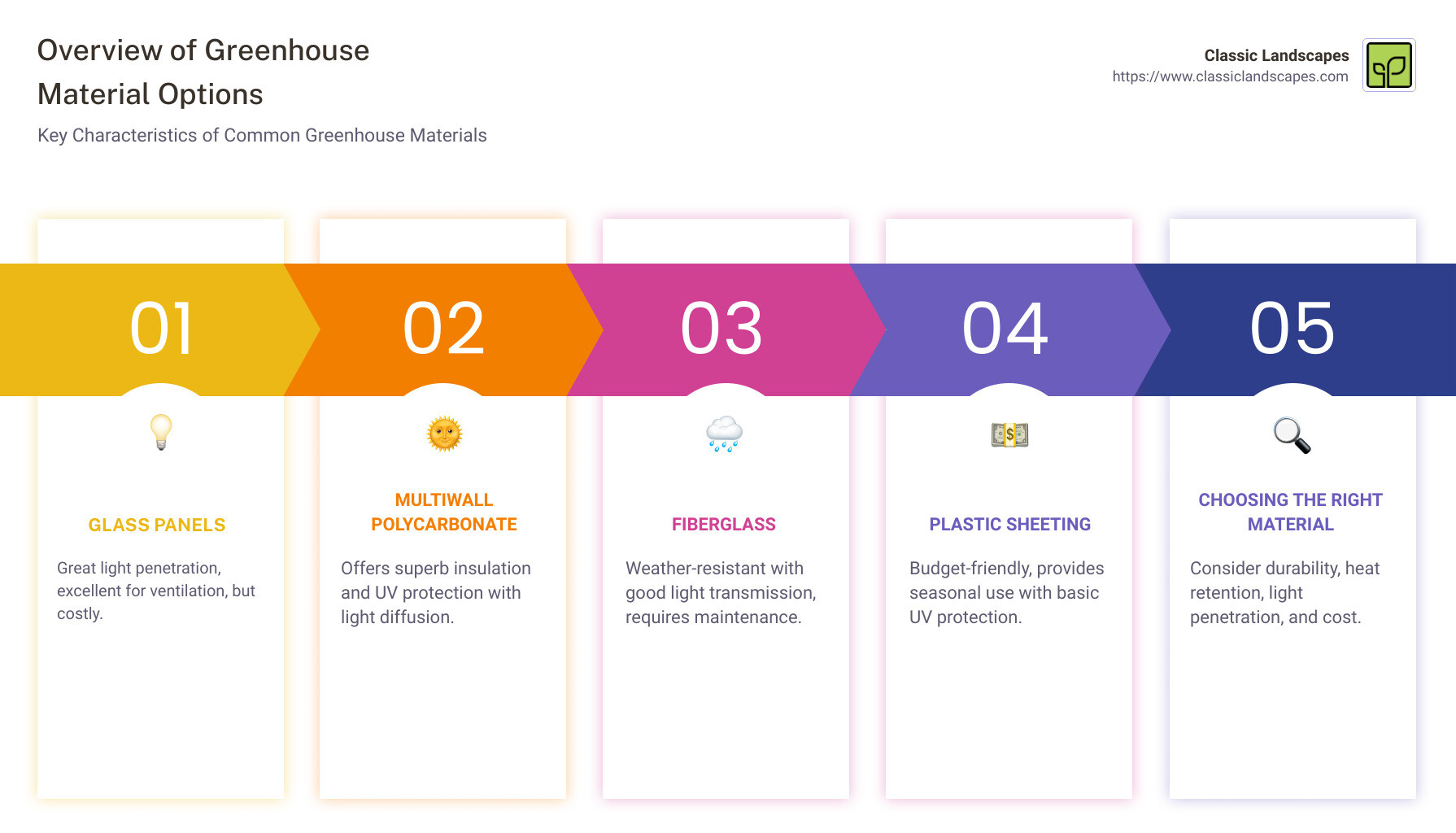
Greenhouse materials play a crucial role in how well a greenhouse performs, from extending your growing season to ensuring effective energy use. If you're short on time, here's a quick guide:
- Glass Panels: Excellent for light but can be costly.
- Multiwall Polycarbonate: Offers great insulation and diffuses light.
- Fiberglass: Strong and weather-resistant but may yellow over time.
- Plastic Sheeting: Budget-friendly and best for temporary setups.
Whether you're a home gardener or running a commercial operation, the right materials can make a significant difference in growing goals and energy efficiency.
My name is Josh Payne, and with over 25 years in the landscape and garden industry, I lead Classic Landscapes, specializing in effective and sustainable use of greenhouse materials. Stay with us to dig into the best materials suited for your unique needs.
Types of Greenhouse Materials
When it comes to greenhouse materials, the choice you make can significantly impact your plant growth and energy efficiency. Let's explore the four main types: glass panels, multiwall polycarbonate, fiberglass, and plastic sheeting.
Glass Panels
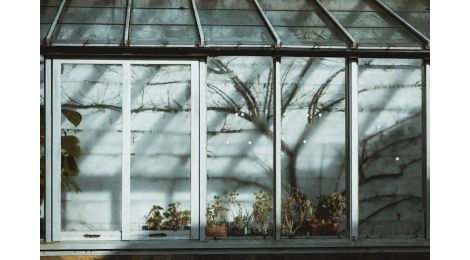
Glass panels are the traditional choice for greenhouses. They allow the highest amount of light to pass through, which is excellent for plant growth. However, glass can be expensive and heavy. It also requires proper ventilation to prevent overheating on sunny days. If you have access to old storm windows, you can repurpose them to save on costs.
Multiwall Polycarbonate
Multiwall polycarbonate is becoming increasingly popular due to its lightweight and durable nature. It doesn't let in as much light as glass, but it diffuses light, offering better UV protection for plants. This material provides excellent insulation, helping retain heat, and requires minimal maintenance. While it may cost more than plastic sheeting, its longevity makes it a cost-effective choice over time.
Fiberglass
Fiberglass panels also allow a lot of light in and are more robust than glass, making them suitable for areas with extreme weather. They are easy to install and less costly than glass. However, fiberglass can yellow over time, reducing its light transmission capabilities. It's also more porous and can be flammable, so it may need replacing more often than multiwall polycarbonate.
Plastic Sheeting
Plastic sheeting is a budget-friendly option for those who need a temporary setup. It lets in a good amount of light and can be doubled up for better protection. Some plastic sheets come with UV protection and infrared inhibitors, which help in retaining heat and protecting plants. However, this material typically lasts only a single season.
Glass Panels
Glass panels have long been the go-to choice for greenhouses, and for good reason. They offer exceptional light penetration, allowing the most sunlight to reach your plants. This is crucial for photosynthesis and can lead to healthier and faster plant growth.
However, with great light comes great responsibility. Ventilation becomes key when using glass panels. Without proper airflow, your greenhouse can quickly become too hot, damaging your plants. Installing vents or using exhaust fans can help manage the temperature and keep your plants thriving.
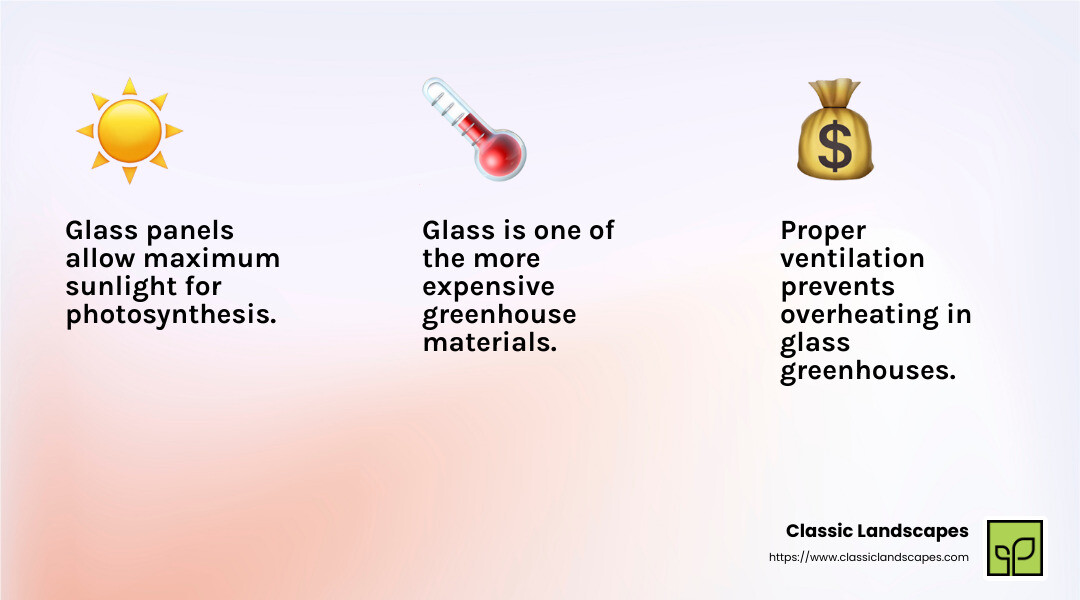
When considering glass panels, cost is an important factor. Glass is one of the more expensive greenhouse materials. It's also heavy, which can increase installation costs and complexity. But if you have access to old storm windows, you might save some money by repurposing them for your greenhouse.
In summary, glass panels are a classic choice that offers excellent light penetration but requires careful attention to ventilation and cost management. If you're considering a glass greenhouse, Classic Landscapes can provide guidance and support to ensure you create the perfect environment for your plants.
Multiwall Polycarbonate
Multiwall polycarbonate is a popular choice for greenhouses, thanks to its unique combination of light diffusion, UV protection, and insulation.
Light Diffusion
Unlike glass, which allows light to pass directly through, multiwall polycarbonate diffuses light. This means the light is spread more evenly throughout the greenhouse. Why is this important? Even light distribution helps prevent hot spots and ensures all your plants get the light they need to grow evenly. This can lead to healthier plants and more uniform growth.
UV Protection
One of the standout features of multiwall polycarbonate is its UV protection. These sheets are designed to block harmful UV rays that can damage plants. This protection extends the life of the greenhouse material itself, as it reduces the likelihood of yellowing or becoming brittle over time.
Insulation
When it comes to insulation, multiwall polycarbonate outperforms many other greenhouse materials. The multiple layers trap air, providing excellent thermal insulation. This means it retains heat better, which can be a big advantage in cooler climates or during the winter months. Better insulation can also lead to energy savings, as you'll need less heating to maintain the ideal temperature for your plants.
In summary, multiwall polycarbonate offers a balanced solution for greenhouse enthusiasts. Its light-diffusing properties, UV protection, and superior insulation make it a versatile choice. Whether you're a hobbyist or a professional grower, considering multiwall polycarbonate could be a wise decision. Classic Landscapes is here to help you explore this option and find the best fit for your greenhouse needs.
Fiberglass
Fiberglass is another option for greenhouse materials, offering a blend of weather resistance, light transmission, and maintenance considerations.
Weather Resistance
Fiberglass panels are known for their durability and ability to withstand extreme weather conditions. Unlike glass, which can shatter, fiberglass is strong and resilient. This makes it a reliable choice in areas prone to heavy storms or fluctuating temperatures. However, it's important to note that fiberglass can become porous over time, which may affect its longevity.
Light Transmission
When it comes to light transmission, fiberglass allows a significant amount of light to enter the greenhouse, similar to glass. This ensures that plants receive ample sunlight, which is essential for photosynthesis and growth. However, fiberglass tends to yellow with age, which can reduce its light transmission capabilities. Regular cleaning can help, but eventually, the panels may need replacement to maintain optimal light levels.
Maintenance
Fiberglass is relatively easy to install and replace, making it a convenient choice for many gardeners. However, its tendency to yellow and become difficult to clean means that maintenance is an ongoing consideration. This material is also more flammable than other options, so it's crucial to ensure that any heat sources are managed carefully to avoid potential hazards.
In summary, fiberglass offers robust weather resistance and excellent light transmission, making it a viable option for greenhouses. However, its maintenance requirements and susceptibility to yellowing mean it might not be the best long-term solution for everyone. Classic Landscapes can guide you in weighing these factors to decide if fiberglass is the right choice for your greenhouse project.
Plastic Sheeting
Plastic sheeting is a popular choice for those looking for cost-effective greenhouse materials. It's an excellent option for gardeners who want to keep expenses low while still providing a suitable environment for their plants.
Cost-Effective Solution
When it comes to affordability, plastic sheeting stands out. It is significantly cheaper than glass or polycarbonate, making it an ideal choice for hobbyists or those just starting out with greenhouse gardening. Plus, if you're on a budget, you can easily replace it each season without breaking the bank.
UV Protection
While plastic sheeting is less durable than other materials, it can still offer UV protection for your plants. Many plastic sheets come with built-in UV inhibitors, which help shield plants from harmful rays while allowing enough light for growth. This feature is crucial in preventing plant damage and ensuring healthy development.
Seasonal Use
Plastic sheeting is perfect for seasonal use. It's lightweight and easy to install, making it a great choice for temporary greenhouses or hoop houses. If you live in a region with harsh winters, you can easily dismantle your greenhouse at the end of the growing season and reassemble it when the weather improves.
For those seeking a budget-friendly and flexible option, plastic sheeting is a worthwhile consideration. Classic Landscapes can help you explore this option further, ensuring your greenhouse meets your gardening needs effectively.
Choosing the Right Greenhouse Material
Selecting the right greenhouse materials is crucial for creating an environment where your plants can thrive. Let's break down the key factors to consider: durability, heat retention, light penetration, and cost.
Durability
When it comes to longevity, multiwall polycarbonate is a standout choice. This material is known for its strength and can last over a decade with minimal maintenance. Unlike glass, which can break easily, polycarbonate is shatter-resistant and can withstand harsh weather conditions. Fiberglass is another durable option, offering resistance to extreme weather, but it may require more frequent replacements due to yellowing.
Heat Retention
If maintaining a consistent temperature is a priority, consider materials that offer excellent heat retention. Multiwall polycarbonate excels in this area due to its insulating properties, which help keep your greenhouse warm even when temperatures drop. Plastic sheeting, while not as effective as polycarbonate, can also help retain heat, especially when used in layers.
Light Penetration
Glass panels allow the highest amount of light penetration, making them ideal for plants that require a lot of sunlight. However, they also need proper ventilation to prevent overheating. Polycarbonate, on the other hand, diffuses light, reducing the risk of plant scorching while still ensuring adequate sunlight for growth.
Cost
Cost is often a determining factor for many gardeners. If you're on a tight budget, plastic sheeting is the most affordable option. It's perfect for seasonal use and can be replaced easily without significant expense. For a more permanent solution, polycarbonate offers a balance between cost and durability, providing long-term value despite a higher initial investment.
Each material offers unique benefits, so consider your specific needs and goals. Whether you're looking for something temporary or a long-lasting solution, Classic Landscapes can guide you through the process, ensuring you make the best choice for your gardening project.
Frequently Asked Questions about Greenhouse Materials
What material should I use for a greenhouse?
Choosing the right material for your greenhouse can significantly impact plant growth. Polycarbonate is a popular choice among gardeners due to its ability to diffuse sunlight. This diffusion helps protect plants from harmful UV rays while ensuring they receive enough light for healthy growth. Unlike glass, which can sometimes cause plants to scorch, polycarbonate provides a more controlled environment.
What is the cheapest way to build a greenhouse?
If you're on a budget, plastic sheeting is the most cost-effective material for constructing a greenhouse. It's lightweight, easy to install, and perfect for seasonal use. Pair it with a simple frame construction using PVC pipes or wooden pallets. This setup is not only affordable but also allows for flexibility in design and size. While plastic sheeting doesn't last as long as other materials, its low cost makes it easy to replace yearly if needed.
What greenhouse material lasts the longest?
For those seeking longevity, UV-resistant plastics like multiwall polycarbonate are the best option. Polycarbonate can last over a decade, offering durability and protection against weather damage. Its shatter-resistant properties make it a safer alternative to glass, and it requires minimal maintenance over its lifespan. This makes it an excellent choice for gardeners looking for a long-term investment in their greenhouse setup.
Choosing the right material depends on your specific needs and budget. Classic Landscapes can help you steer these choices, ensuring you select the best materials for your gardening goals.
Conclusion
At Classic Landscapes, we understand that building a greenhouse is more than just picking materials—it's about creating a space that suits your gardening dreams and fits seamlessly into your outdoor environment. Our personalized service ensures that every installation is custom to your unique needs, whether you're a hobbyist looking to extend your growing season or a commercial enterprise aiming to maximize production.
We take pride in offering expert advice and careful placement of materials. Our team is ready to handle special installation requests, whether you're opting for the sleek look of glass panels or the durability of multiwall polycarbonate. We focus on making sure your greenhouse not only looks great but also performs efficiently, providing the best environment for your plants to thrive.
Choosing the right greenhouse materials can be daunting, but with our guidance, you can make informed decisions that align with your goals and budget. From the initial consultation to the final touches, Classic Landscapes is committed to helping you create a greenhouse that you can be proud of.
For more information about our services and how we can assist you in building the perfect greenhouse, visit our Classic Landscapes service page. Let us help you transform your space into a thriving garden oasis.